Canadians are set to cast their ballots in a historic election deeply influenced by US President Trump: since his return to office, diplomatic and economic relations with Canada have been at stake, from the imposition of tariffs on Canadian imports, and from comments on making the neighbour state the new 51st US state. What began as a seemingly predictable victory for the Conservative Party has evolved into a highly charged contest, with Trump’s policies and rhetoric playing a central role in reshaping Canadian politics. A new wave of patriotism has risen in the whole country, pushing citizens far from anything that aligns with Trump’s ideology and with US interests.
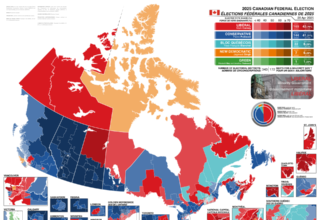
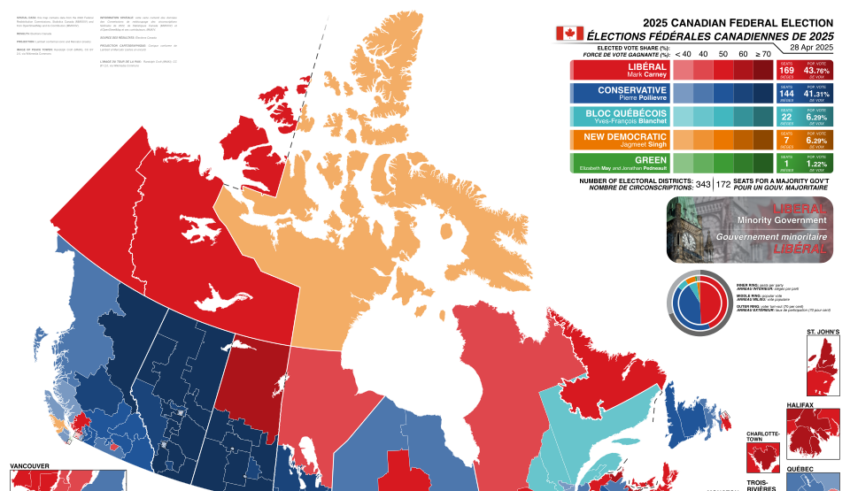
Trump redefined the meaning of political identity on the continent. His “America First” nationalism and his decision to distance himself from traditional alliances forced Canadian politicians to take clearer stances on national identity, immigration, and governance. As such, the national election has become a political and civic battleground on how to approach Trump in the following period: within a week, Liberals seem to have almost entirely closed the gap with the Conservatives, with only a 1% difference. The Liberals candidate, Mark Carney, has incarnated the antithesis to Trumpism, advocating for inclusivity, climate action, and multilateralism with reliable trade partners such as the UK and the European Union. On the other hand, Conservative leader Pierre Poilievre has framed himself as the candidate of change, focusing on issues such as soaring housing costs, unaffordability, and crime.
The high-stakes trade battles brought issues of sovereignty and diversification to the forefront of election debates. On his first day in office, Trump announced a 25% tariff on imports from Canada and Mexico, affecting more than a third of Canadian goods, including steel and aluminium. The motivations behind Trump’s decision rested on allegedly false claims that Canada is responsible for the fentanyl crisis and illegal immigration: the reality is that Canada accounts for less than 1% of the fentanyl and undocumented migrants crossing the northern and southern US borders. Tensions have continued to escalate to the point that Canada requested a dispute consultation at the World Trade Organization. The imposition of tariffs clearly impacted the country’s economy and played a major role in shifting the population’s perception of Trump’s role and the effectiveness of his policies, aligning with conservative agendas like his.
Trump’s success also emboldened a new wave of Canadian populism. While Canadian culture remains distinct in tone and scale from American populism, the 2019 and 2021 elections saw increased support for anti-elite rhetoric and distrust of government, particularly among disaffected voters. Misinformation, distrust in mainstream media, and conspiracy theories surged once again during Trump’s tenure, spilling across the border into Canadian discourse. This presented new challenges during Canadian elections: how to ensure civil debate, protect election integrity, and preserve trust in institutions, all while navigating an increasingly polarized media environment.
Trump’s impact on Canada’s elections isn’t about direct intervention, but about disruption. His presidency is forcing Canadians to reflect deeply on their own values, vulnerabilities, and democratic systems. Even as Trump recedes from the US office, the forces he unleashed, such as polarization, populism, and economic nationalism, will continue to influence Canadian political life. The question that arises now is whether Trump’s presidency had a counter-effect on national elections in Canada, pushing citizens to vote for Liberals and any ideology that will enhance Canada’s autonomy and sovereignty against a Superpower like the US.
By The European Institute for International Relations