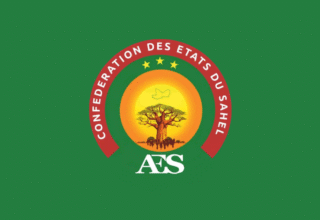
The Sahel region has for long been plagued by terrorism, poverty, and political instability. Recently, however, the region has been undergoing a dramatic and underappreciated geopolitical realignment. During the course of the last months, Burkina Faso, Mali, and Niger have officially withdrawn from the Economic Community of West African States and have announced the consolidation of their military and political confederation, the Alliance of Sahel States. Parallelly, they have also strengthened and developed closer ties with external actors such as Russia and, to a lesser extent, Turkey and Iran. Even though this shift has been presented by local leaders as a move toward sovereignty, it nonetheless represents a broader challenge to regional integration, democratic norms, and long-standing partnerships with Western powers, especially France and the European Union.
The transformation of these states into juntas which are united by shared grievances and external military support should not be dismissed as a temporary or reactionary response to security threats as it may signal a deeper and more strategic pivot reflecting the region’s disillusionment with international actors. The withdrawal of French troops and the decline of UN peacekeeping missions, such as MINUSMA in Mali, have left a vacuum which is now partially being filled by the Russian Wagner Group and bilateral Russian cooperation agreements. While these partnerships are publicly framed as non-interference-based and aimed at respecting sovereignty, they also raise concerns regarding opaque governance, human rights abuses, and the outsourcing of security to actors with little interest in long-term stabilization or institutional development. The danger of this new alliance and operational framework lies in it becoming a blueprint for other fragile states seeking to consolidate power through force rather than reform. Moreover, the erosion of ECOWAS as a regional body is further weakening one of Africa’s most important systems for economic integration and democratic governance. ECOWAS, despite its flaws, has been a rare example of African-led crisis response, including interventions in Gambia and Côte d’Ivoire and its ongoing fragmentation risks to jeopardise decades of progress toward collective security and free movement across West Africa. Nonetheless, the appeal of the AES model must be understood instead of rejected. In that regard, these governments perceive Western engagement in the territory as conditional, bureaucratic, and mostly unresponsive to the local realities, while, in contrast, Russian support has been widely perceived as immediate, transactional, and free from Western democratic demands. This narrative resonates with populations frustrated by years of insecurity, unemployment, and perceived neocolonial interference and, thus, condemning these regimes without offering credible alternatives may only deepen their alignment with authoritarian patrons. If the international community seeks to counterbalance and mitigate the effects of this trend, it is essential to carry out pragmatic and respectful engagement.
Firstly, support to civil society and local governance initiatives should be scaled up in regions still under democratic control, which include Senegal, Ghana, and Côte d’Ivoire, in order to prevent the spread of less democratic alternatives. Moreover, ECOWAS should be reformed to include mechanisms for political dialogue that are more flexible, which would allow it to mediate rather than only establishing sanctions. Such an all-or-nothing approach to coups has shown diminishing returns and may even accelerate exits from the organisation. Furthermore, Western military support must be rethought. Instead of large-scale counterterrorism deployments or drone surveillance bases, emphasis should be placed on building up community-level resilience by training national security forces with stronger accountability, and investing in cross-border economic opportunities. This approach may take longer, but it directly addresses the root causes of violence such as exclusion, underdevelopment, and governance gaps. Finally, global powers must avoid framing Africa as a mere theatre for geopolitical rivalry. Reducing the Sahel’s crisis to a Russia-versus-West competition would ignore the agency of African States and further perpetuate the same externalized decision-making that has fueled resentment amongst Sahel States. Instead, international actors should prioritize partnerships based on mutual respect, transparency, and long-term peacebuilding, even when this means engaging with transitional regimes through careful, conditional diplomacy.
In conclusion, the emergence of the AES and the Russian footprint in the Sahel is not just a regional issue, but rather a reflection of shifting global norms around sovereignty, legitimacy, and security cooperation. If Europe and its partners fail to act with nuance and humility, they risk becoming irrelevant in one of the most strategically critical regions of the 21st century.
By The European Institute for International Relations