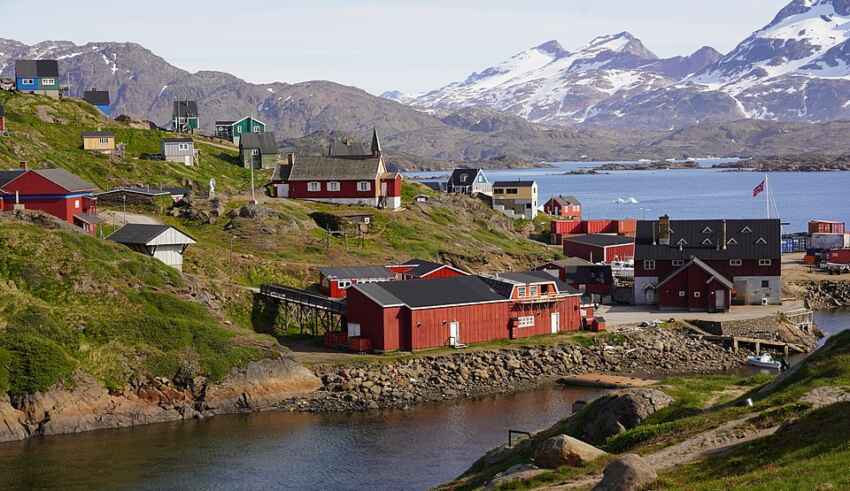
Greenland has for a long time been seen as a remote and frozen periphery. However, it is now rapidly emerging as a pivotal player in the geopolitics of the 21st century as beneath its vast ice sheet lie substantial reserves of rare earth elements which are essential to the production of electric vehicles, renewable energy technologies, and advanced defense systems. As global powers race to secure critical mineral supply chains, Greenland has become a major strategic asset.
In recent years, driven largely by the pressures derived by digitalization and decarbonization efforts, the global demand for rare earths has surged . Nonetheless, this demand has been met with an uneven supply chain, given that China currently refines over 80% of global rare earth elements. This near-monopoly has raised concerns in Brussels, Washington, and Tokyo, not only because of economic dependency but due to the risk of geopolitical coercion as evidenced by China’s 2010 embargo on rare earth exports to Japan. This event offered a clear warning of how these materials can be politicized and in this context, Greenland’s untapped reserves have, thus, become a new frontier in global resource diplomacy. The island’s geopolitical relevance is further heightened by the effects of climate change since due to the increasing recession of Arctic ice, Greenland’s mineral-rich terrain has become more accessible, and new shipping routes have begun to emerge. This has triggered renewed strategic interest from the United States, China, and the European Union as highlighted by the reopening of the U.S. consulate in Nuuk, significant American aid packages, and attempts by Chinese firms to invest in local infrastructure. However, this scramble for resources has not gone unchallenged. Greenland’s political landscape is defined by its status as an autonomous territory within the Kingdom of Denmark and in recent years, local authorities, particularly those from the left-wing Inuit party, have emphasized environmental protection, indigenous rights, and sustainable development as socio-political priorities. The resulting tensions between foreign strategic interests and local political goals must therefore be handled delicately in order to avoid undermining the sovereignty of the territory. Additionally, the region risks becoming the setting for a new form of neo-colonial competition given that usually, resource-rich territories are approached as extraction zones rather than equal partners in development initiatives.
To avoid such issues and in order to build a constructive path forward it is necessary to carry out effective and pragmatic strategies. The European Union, in particular, has an opportunity to redefine how it engages with Greenland and, by extension, how it positions itself as a geopolitical actor in the Arctic. For instance, by establishing a Greenland-EU council focused on mineral partnerships which would include EU institutions, Greenlandic political representatives, and indigenous leaders, and would be tasked with overseeing joint decision-making on regional projects, the EU could offer a more equitable governance structure. Furthermore, Europe should also consider supporting Greenland in developing its own refining capacity since by investing in sustainable infrastructure, the EU can reduce dependency on Chinese processing facilities while contributing to Greenland’s economic autonomy. Furthermore, all future mining projects in Greenland should be grounded in strong environmental and social governance frameworks, legally binding and co-developed with local communities which would ensure that environmental standards are upheld and that economic benefits are shared fairly. At the multilateral level, Europe should also advocate for the creation of a code of conduct regarding arctic resources within the Arctic Council given that such a code could establish norms on resource extraction, transparency, and environmental protection and consequently setting a standard for responsible engagement in the region.
Ultimately, Greenland poses a key test for the international community as the question is not just how to secure critical minerals, but whether it is possible to do so without falling into past practices of exploitation. Moreover, the energy transition must not come at the cost of indigenous rights or environmental integrity and Greenland must not be seen merely as a provider of resources but it must be recognized as a political actor with its own interests and aspirations. The geopolitics of rare earths may begin in the Arctic, but the implications will shape the credibility of Europe’s foreign policy in an increasingly multipolar world.
By The European Institute for International Relations