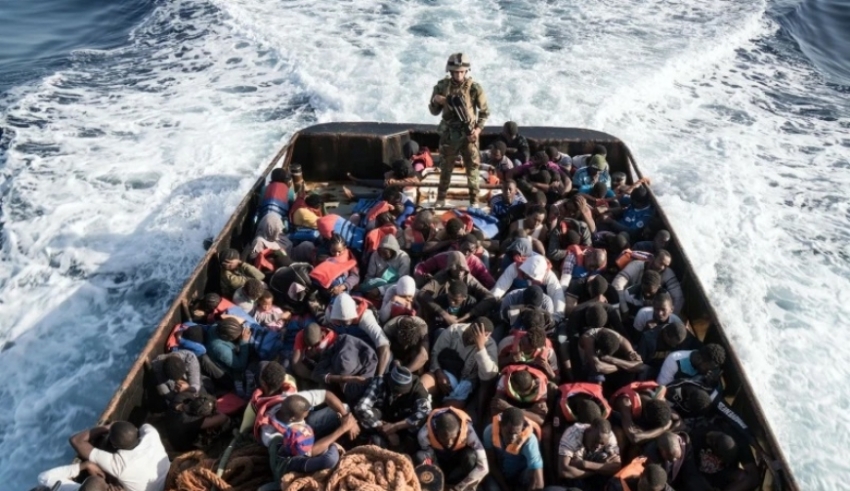
The fall of Kabul to the Taliban came as a shock to most observers. Besides the unknown future awaiting the Afghan population, especially the female part of it, which rose quickly to the attention of the international community, French President Emmanuel Macron warned of a new wave of refugees to the EU (Euronews, 2021). Another recent example where a government used illegal migrants to blackmail another one was Belarus. President Alexander Lukashenko authorized the illegal crossing of mostly Iraqi refugees over the border to Lithuania. These episodes are a stark reminder of the 2015 refugee crisis which plunged the unprepared EU into political chaos. On the other hand, the Belarusian example makes it clear that illegal migration can be used by a state to impose its demands on other parties.
Last year, when Turkish President Recep Tayyip Erdoğan warned the EU to fulfill its obligations from its 2016 bilateral deal to stave off the masses of refugees which had come to Europe in the year before. Erdoğan complained that the EU’s promises to remove visa requirements for Turkish citizens and that cash disbursements would arrive too slowly. As growing numbers of refugees at the Greek border were observed, fears of another refugee crisis moved Germany to push for financial aid to Turkey, however, it encountered harsh critique from other EU peers which rejected the “instrumentalization of human suffering” (Khan, 2020).
How can (illegal) migration be used as a geo-economic tool?
As Greenhill (2016) writes since the 1951 Refugee Convention came into force, there have been at least 75 attempts globally by state and non-state actors to use displaced people as political weapons (by 2016). The strategy is straightforward: these actors dictate their demands which the targeted state(s) should concede lest the latter shall face potentially severe migration-related consequences (Greenhill, 2016). Demands can be of a political, military, and/or economic nature, ranging from the provision of financial aid to full-scale invasion and assistance in effecting regime change. In almost three-quarters of these cases, the coercers achieved at least partially their articulated goals (Greenhill, 2016). That this kind of geo-economic tool has not been acknowledged earlier has its reasons: for once, such coercive threats are often communicated non-publicly and bilaterally; also, such threats may be embedded within outflows triggered by other factors (ibid.).
A look at some historical cases will be suitable here. One approach to coercion has been to merely open (and later close) borders normally sealed or just to threaten to do so. For example, former Cuban President Fidel Castro used this tool to send refugees to the US on at least three occasions: in 1965, 1980 (the Mariel boatlift), and 1994. Similarly, Libya’s former president Muammar Gaddafi threatened to let masses of African refugees cross into the EU several times (in 2004, 2006, 2008, 2010, and 2011). Before his fall, Gaddafi threatened to use this tool against the intervening forces in the Libyan uprisings – without success (Greenhill, 2016).
Another approach has been to force large numbers of victims across borders, as Yugoslav President Slobodan Milošević did in the spring of 1999 in an attempt to compel NATO to stop its bombing campaign during the Kosovo War. Former German Foreign Minister Joschka Fischer later admitted his regret in not taking Milošević seriously when he said he “could empty Kosovo in a week” (Marlowe, 2000). Thus, while NATO was seeking to compel Milošević to cease his offensive against the Kosovars through the use of air strikes, the Yugoslav president was engaged to counter these pressures by using displaced people as a weapon NATO and its allies.
A third approach has been by exploiting and manipulating outflows created by third parties, be it intentionally or inadvertently. For instance, in the late 1970s, a group of the Association of Southeast Asian Nations threatened to literally push Indochinese boat people out to sea, if their demands were not met (Greenhill, 2016). Western states obliged and received some of the so-called boat people.
There is a good reason why especially liberal democracies have become targets of this foreign policy tool. Greenhill (2016) found that more than 80% of targeted states were liberal democracies (around 70%) or mixed multilateral targets including liberal democracies (11%). Liberal democracies often become victims of conflicting internal interests. On one side, these states have their own normative and legal commitments to protect people fleeing violence and persecution; on the other side, some population segments in democracies are opposed to receive displaced people for a range of economic, political or cultural reasons. The illegal migration-related costs amount for the EU and its member states to €37.8-60.2 billion per year; also, asylum beneficiaries are 34% less likely to find employment (EPRS, 2018). Furthermore, there is evidence from several EU countries that illegal migration is connected to higher levels of criminality (e.g., Statistics Denmark, 2016; Pancevski, 2018; Viljakainen & Lakka, 2018). Such a clash of commitments with public opinion and security makes it politically less costly to concede to coercers’ demands.
The 2015 refugee crisis in the EU
The usual explanation of the causes of the migration crisis in 2015 are vague and fail to address the jump in refugee numbers beginning in the early summer of that year while numbers of asylum requests to EU countries had been already much higher – 626,045 which represents a 44% increase to 2013 – in 2014 than in previous years; the top three nationalities were Syrians, Afghanis, and Kosovars (Eurostat, 2015). In Turkey, the number of registered refugees had risen from 14,237 in 2012 to 224,664 in 2013 and 1,519,286 in 2014 (DGMM, 2016). Already in 2013, estimates put to the number of refugees and illegal immigrants having arrived in Turkey at 1.8 to 4 million (Düvell, Soyusen & Corabatir, 2015).
Until the end of 2013, all Syrian refugees according to official accounts resided in camps set up by authorities in the south-east of Turkey (Içuygu, 2015). In fact, already in 2011, a large presence of Syrian refugees could be encountered in Istanbul – because until January of that year, when visa requirements for Syrians were re-introduced, no visas were needed to enter Turkey. It seems realistic to assume that the vast majority of refugees lived in camps until the beginning of 2013. What radically changed the situation was the dramatic increase of migratory flows in the following two years, which could not be stemmed by Ankara for various reasons.
In March 2015, Turkish Prime Minister Ahmet Davutoğlu confirmed that Turkey was hosting more than two million Syrians (Daily Sabah, 2015). The situation ultimately exacerbated during the confrontations between the Kurdish People’s Defense Units and the Islamic State in Syria during spring and summer 2015, Russia’s entry into the conflict in September and the successive military offensives by the majority Shiite coalition supported by Turkey and Saudi Arabia against the Sunni rebels (Santoro, 2016). For one, Turkey was not able to build a sufficient number of new refugee camps and to control all arrivals via air, land, and sea; for another, the arriving Syrians were not eager to be confined in camps, and hence, they began to scatter in Turkey. The policy of receiving all streams of Syrian ‘guests’ cost Ankara more than $10 billion, a huge financial burden on the Turkish budget (Santoro, 2016).
There seem to have been two major motives for the Turkish government to allow refugees to leave their territory for Europe. One concerns the social-ethnic composition: some of the Syrian refugees arriving to the EU were allegedly from privileged classes under the Al-Assad regime (including many Alawis and Christians) and Kurdish Syrians. Two groups not positively viewed by Ankara since they stand on opposing sides to Turkey’s plans for Syria. From Erdoğan’s point of view, these segments of society are expandable; they were pushed out from their country of origin by the Islamic State and other militias, some of them linked to Al-Qaeda (Dottori, 2015).
The other motive concerns the actual use of these displaced people as a geo-economic tool to condition European governments to leave Al-Assad to his fate, to let political Islam triumph in the Middle East, and to make them contribute to an arrangement in Syria to Turkish ambitions (Dottori, 2015). This strategy recalls Gaddafi’s practice to threaten European states with illegal migrants, also adding other unsolicited refugees from Afghanistan and Pakistan (ibid.). Even after Gaddafi’s fall, shortly following Ankara’s threats, one of Libya’s two rival governments – namely, the one residing in Tripoli supported by Turkey – demanded of the EU to be diplomatically recognized and financially assisted, or else, they would send illegal migrants and asylum seekers over the Mediterranean Sea (Greenhill, 2016).
Turkish demands in the summer of 2015 included the lifting of visa restrictions, financial aid to mitigate the burden of hosting more than two million Syrians, and the reinvigoration of their EU membership bid (Greenhill, 2016). Brussels and Ankara entered into hasty negotiations to put an end to masses of refugees coming from Turkey. The EU agreed to provide €3 billion in financial aid, accelerate EU membership talks, and a visa liberalization scheme to Turkey; in return, Turkey assented to bolster border controls in cooperation with EU states, to retake illegal migrants, and to grant the EU border agency Frontex more authority to expel rejected asylum claimants (Nielsen, 2015).
The timing of these announcements coincided with Erdoğan’s campaign for the November general elections. Before the deal with the EU his approval ratings had been at a personal low, but they took a turn upward securing Erdoğan’s re-election (Kaya, 2020; Soylu, 2020). Furthermore, a critical European Commission progress report condemning the Turkish leader’s creak-down on the police and the judiciary following investigations into high-level corruption was released after the elections (European Commission, 2015). Over the successive months, Germany intensified its diplomatic efforts at the highest levels which led to the formulation of the EU-Turkey Readmission Agreement and the EU-Turkey Statement in March 2016 to resolve the uncontrolled outflow of illegal migrants and appease their populations. Both documents aimed at easing the political and societal instability caused by the refugee crisis and gave Ankara an advantage in both economic and political terms which it used subsequently in different occasions as a diplomatic tool to achieve own objective (Kaya, 2020).
Conclusion
What options do (possible) targets of migration-driven coercion have? As Greenhill (2016) shows there are several, however, they all come with their own drawbacks. First, targeted states can concede (as often happens), which carries the risk of emboldening coercers to repeat and expand their demands. Second, targeted states can take military action and attempt to change conditions on the ground in countries of origin; however, wars cost a lot and outcomes are uncertain. Third, targeted states can proactively address their populations to welcome displaced people by stressing (unclear) long-term economic benefits of migration; history, however, shows that mass immigration always leads to the destabilization of any society. Fourth, targeted states can renege on their own commitments and close their borders, which deprives them from one of their greatest achievements, open borders (at least in the Schengen area).
It is easy to blame the countries at the receiving end of targeted efforts ‘weaponizing’ refugees and illegal migrants of inhumane policies if they have the urge to control immigration flows. The governments enabling such practices should be condemned more resolutely.
Bibliography
Daily Sabah (2015, Mar 05). PM Davutoglu criticizes UN over “no Plan A” to end bloodshed in war-torn Syria. goo.gl/MUFm3x
DGMM (2016). Resident Permits. Ankara: Directorate General Migration Management.
Dottori, G. (2015, Oct 08). Migrants as weapons? [Migranti come armi?]. https://www.limesonline.com/cartaceo/migranti-come-armi
Euronews (2021, Aug 17). Afghanistan: Macron calls for ‘robust’ EU plan to tackle increase in irregular migration.
European Commission (2015, Nov 10). Turkey 2015 Report. SWD(2015) 216 final. https://ec.europa.eu/neighbourhood-enlargement/sites/near/files/pdf/key_documents/2015/20151110_report_turkey.pdf
EPRS (2018). The Cost of Non-Europe in Asylum Policy. PE 627.117. https://www.europarl.europa.eu/RegData/etudes/STUD/2018/627117/EPRS_STU(2018)627117_EN.pdf
Eurostat (2015, Mar 20). The number of asylum applicants in the EU jumped to more than 625 000 in 2014. https://ec.europa.eu/eurostat/documents/2995521/6751779/3-20032015-BP-EN.pdf/35e04263-2db5-4e75-b3d3-6b086b23ef2b
Greenhill, K.M. (2016). The weaponisation of migration. In. M. Leonard (Ed.). Connectivity Wars. European Council of Foreign Relations.
İçuygu, A. (2015). Syrian Refugees in Turkey: The Long Road Ahead, Transatlantic Council on Migration. goo.gl/qzGaJk
Kaya, A. (2020). Migration as a leverage tool in international relations: Turkey as a case study. Uluslararsi Iliskiler, 17(68), 21-39.
Khan, M. (2020, Mar 06). EU refuses to stump up further cash for Turkey migration deal. https://www.ft.com/content/b2726daa-5fb3-11ea-b0ab-339c2307bcd4
Marlowe, L. (2000, Mar 25). War and peace revisited. http://www.irishtimes.com/news/war-and-peace-revisited-1.259905.
Nielsen, N. (2015, Oct 16). Turkey demands €3 bn on EU asylum crisis. https://euobserver.com/migration/130713
Pancevski, B. (2018, Oct 17). An Ice-Cream Truck Slaying, Party Drugs and Real-Estate Kings: Ethnic Clans Clash in Berlin’s Underworld. https://www.wsj.com/articles/ethnic-crime-families-provoke-german-crackdown-1539604801
Santoro, D. (2016, Aug 03). Turkey and the nuclear weapon of the Sirian ‘guests’ [La turchia e l’arma atomica degli ‘ospiti’ siriani]. https://www.limesonline.com/cartaceo/la-turchia-e-larma-atomica-degli-ospiti-siriani
Soylu, A. (2020, Apr 09). Coronavirus in Turkey: Erdogan’s approval retings sourge to four-year high. https://www.middleeasteye.net/news/coronavirus-turkey-erdogan-approval-ratings-surge-high
Statistics Denmark (2016). Immigrants to Denmark [Invandrere i Danmark]. http://www.dst.dk/Site/Dst/Udgivelser/GetPubFile.aspx?id=20704&sid=indv2016
UNHCR (2016). Refugee/Migrants Emergency Response – Mediterranean. https://data2.unhcr.org/en/situations/mediterranean/location/5179
Viljakainen, M. & Lakka, P. (2018, Dec 15). A big report on sexual crime among foreigners – amounts, causes, solutions. https://www.is.fi/kotimaa/art-2000005933247.html
By Andreas Rösl : The European Institute for International Law and International Relations.