A self-governing region of Denmark, Greenland is the world’s largest island, a mineral-rich territory of the Arctic region, and has drawn international attention following US President Trump’s controversial affirmations on two occasions. During his first mandate, in 20119, Trump publicly affirmed the intention of buying Greenland, seen as a strategic geopolitical territory and an incredible economic opportunity for the US: the proposal was rejected by Denmark’s Prime Minister, who confirmed the self-determination of the island. Following the President’s second mandate, in December 2024, Trump posted on social media the renewed intention of taking over Greenland in one way or the other, stating that its ownership and control is an absolutely necessary for the United States.
Similarly, Trump also affirmed the intention to make Canada the 51st state of the US and seize control of the Panama Canal as part of his push for US territorial expansion: as such, Greenland does not seem to be the only threatened state. However, since Denmark is a part of NATO, Greenland is by default a part of the North Atlantic military alliance, and it is also associated with the European Union as one of the 25 overseas countries and territories (OCTs) of the EU. This means that if Trump decided to expand the US borders in Greenland’s territory, the US would have to face NATO and the EU. So why is Trump eager to control this state despite the dangers that come from doing such public affirmations?
Greenland’s strategic importance grew during the 20th century, particularly during and after World War II. In 1941, the US occupied Greenland under an agreement with Denmark’s government in exile to protect North America from Nazi Germany. The US maintained military bases on the island for national security purposes, and in 1946, President Truman’s government first offered to buy Greenland, citing its extreme importance to US defence.
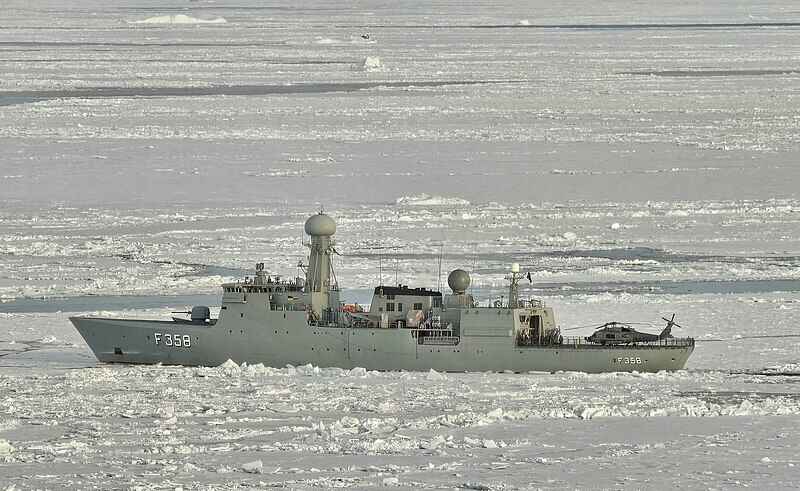
As for the 21st century, Greenland’s geographic position, close to North America, Europe, and Russia’s northern frontier, makes it the perfect location to gain global leverage. For the US, which already maintains the Thule Air Base in northern Greenland, a critical asset for missile warning and space surveillance, the control of the island would represent a fundamental addition in its chess game with other Superpowers. Not to mention the fact that due to climate change and the melting sea ice, Greenland is opening up new shipping lanes and access to new, untouched natural resources.
For instance, Greenland holds significant economic advantages: beneath its icy terrain lies a wealth of rare earth minerals, elements vital to the production of modern technologies like smartphones, electric vehicles, and military systems. Currently, China dominates global rare earth supply chains, so controlling such resources in Greenland would signify the US’s new supremacy in the sector and an important disruption of China’s economic market.
Though Denmark firmly rejected Trump’s proposal and Greenland’s leaders assert their autonomy and self-determination, the episode highlighted how quickly the Arctic is rising on the geopolitical agenda. Indeed, China has declared itself a “near-Arctic state”, Russia is building up its northern military presence, and the US is expanding Arctic operations with the ultimate goal of asserting the region within its borders. For Trump, having full control of Greenland is not just a matter of military security, or global competition against China and Russia to see who can wave their nation’s flag first. Having unilateral access to Greenland’s rare earth reserves would mean reducing dependence on China and strengthening America’s technological and strategic independence.
The competition to influence and invest in the island is, therefore, turning into a political and economic tool in the hands of the most powerful states: the future of the Arctic and the balance of global power may very well hinge on how nations engage with the island.
By The European Institute for International Relations