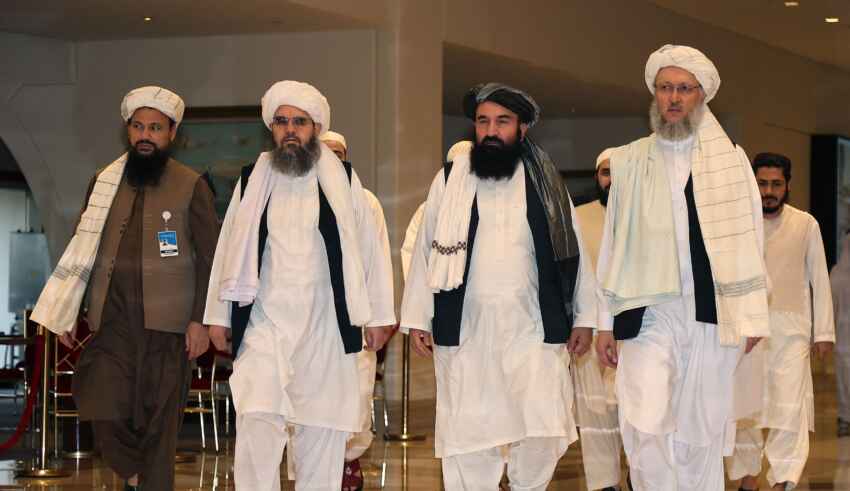
In 2021, after the Western-backed Afghan government dramatically collapsed, the Taliban acquired full power and control over the country. However, three years later and having held de facto control over Afghanistan since 2021, the Taliban has still not been recognised as the legitimate government of the country by most states as well as the United Nations. The situation is, nevertheless, gradually changing, as there appears to be a trend of re-engagement with the Taliban government, which is most notably exemplified by the opening of several embassies and the improvement of diplomatic relations led by countries such as Russia, China and Iran. Added to that, Western countries have initiated limited, technical dialogues on aid and security with the new Afghani regime. This rather inconspicuous realignment of diplomatic frameworks may signal a quiet re-entry of the Taliban into international relations, despite global hesitation. Nonetheless, it is pivotal that the international community moves beyond the current framework of binary of recognition vs. isolation and adopts a pragmatic, conditional engagement strategy aimed at helping the Afghan people and influencing the Taliban’s behavior.
One of the biggest issues that must be addressed and dealt with is the legitimacy vacuum. Given that the Taliban came to power by means of violence and the use of force rather than democratic means, the vast majority of States and International Organisations have not recognised them as a legitimate government. Its egregious record of human rights violations, in particular with regards to women and minorities in the region is another immense obstacle to international recognition. However, the isolation strategies carried out by the international community have had close to no effect as the Taliban still remain in power and have instead grown more internally consolidated. The full isolation of Afghanistan has, consequently, resulted in a lack of diplomatic and economic leverage for the international community as well as the notable diminishment of its capacity to influence and push for reforms in the country. The lack of international engagement has left the Afghan people further marginalized and further deepened the major issues affecting Afghanistan. Not only that, but the cost of the derived humanitarian and economic crisis is immense. According to UN data, over 90% of the population in Afghanistan now lives in poverty as the economy of the country collapses. Even though the sanctions imposed by many countries were aimed at pressuring the Taliban leadership, they have on the other hand inadvertently crippled the country’s economy and public services. Withholding aid for political concessions has, therefore, largely hurt civilians, not Taliban elites. Moreover, international NGOs are facing increased restrictions, in particular regarding female staff members, which has led to a major reduction in the delivery of aid and significant decrease in the ability to influence change on the ground. If the international community’s primary goal is to support the Afghan people and prevent state collapse, a pragmatic shift in policy is urgently required.
Despite showcasing a rigid ideology, the Taliban have shown a certain degree of flexibility in certain areas as they attempt to gain international recognition. This creates a good amount of leverage for the international community, which it should use strategically rather than reactively. Therefore, international actors should propose a phased and conditional engagement strategy which would establish clear benchmarks focused on governance reforms, women’s rights and assurances regarding counter-terrorism. The monitoring of the compliance with such standards should be led by independent UN or regional observers to ensure credibility and in case of adherence with these demands, the Taliban government could be for instance rewarded via development assistance and a gradual normalization of diplomatic relations. Moreover, humanitarian support must not be used as a political or diplomatic weapon. The development and establishment of a neutral coordination mechanism led by the UN could ensure that aid reaches those in need in Afghanistan while parallelly preventing Taliban officials from diverting resources. Furthermore, the international community must strengthen the support of Afghan civil society both inside and outside the country by funding and empowering women-led NGOs as well as by creating communication channels between exiled leaders and those still active inside Afghan territory. Given the dire situation experienced by women under Taliban rule, it is vital to maintain women’s rights as a core, non-negotiable matter, while pushing for progress through engagement and support instead of international and diplomatic disengagement.
The Taliban’s re-emergence is a reality the international community can neither ignore nor wish away, but engagement does not and should not mean endorsement. Pragmatic diplomacy can serve as an effective tool for influence rather than reward. Given that a rigid policy of isolation has reached its limits; a more flexible, principled, and multilateral approach is necessary to avoid repeating past mistakes and as the geopolitical balance shifts, global and regional actors must seize the opportunity to recalibrate their strategies toward Afghanistan before the cost of inaction becomes irreversible.
By The European Institute for International Relations